Contents
The short comparison
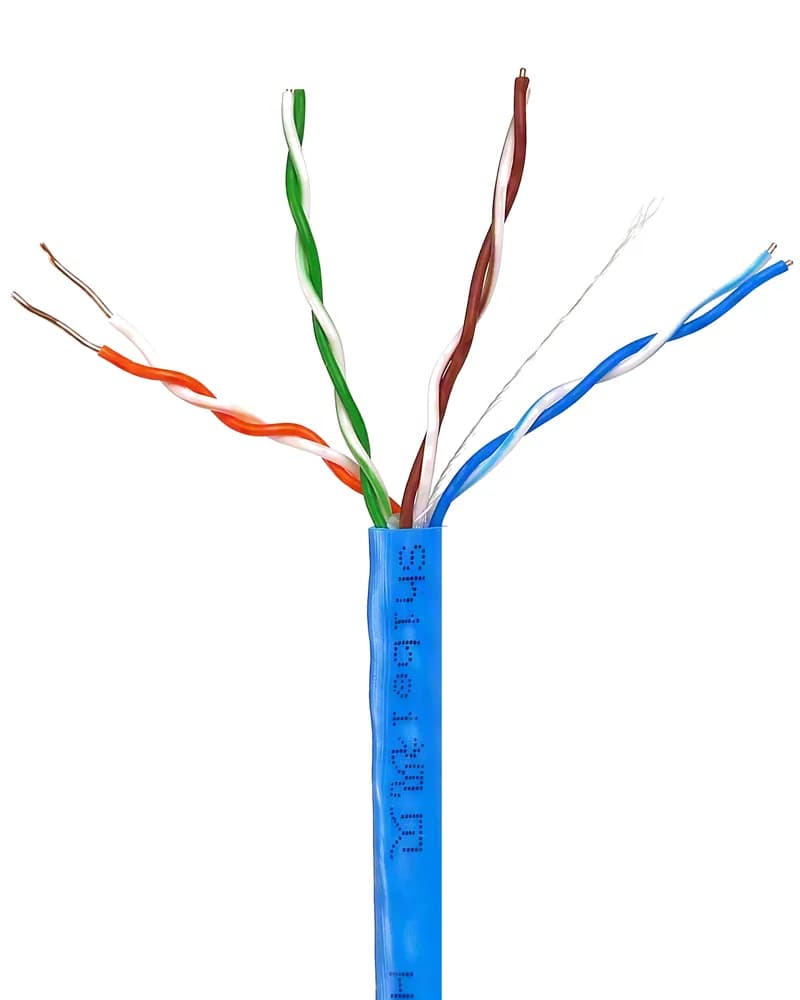 Cat5e
Cat5e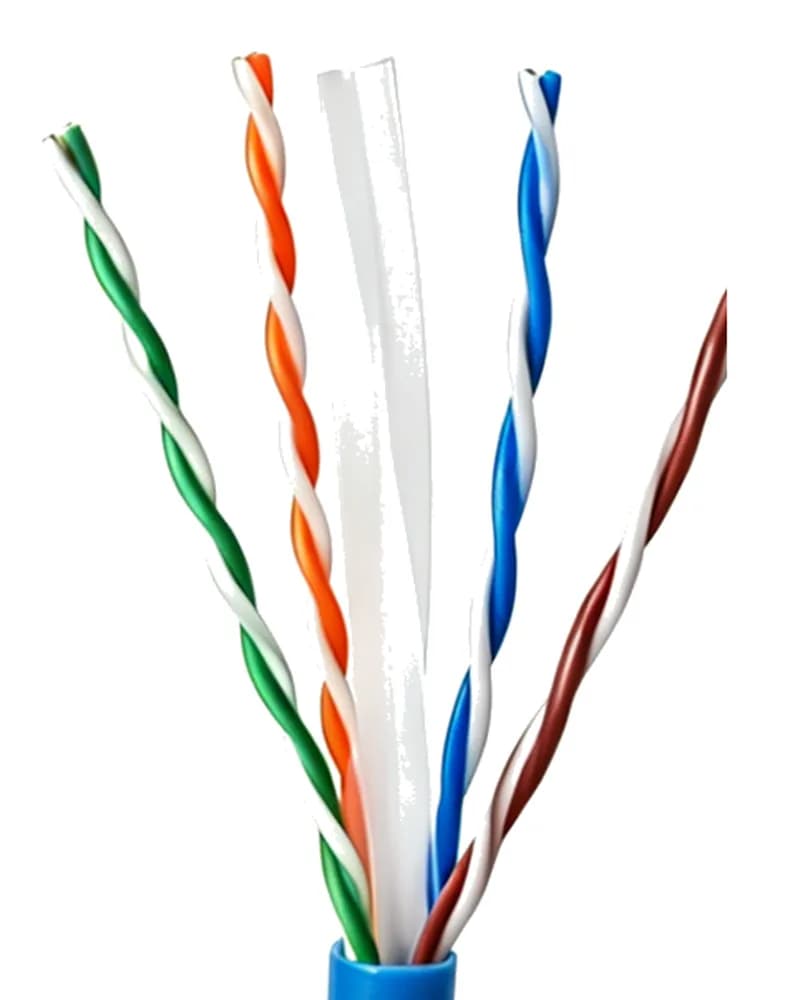 Cat6
Cat6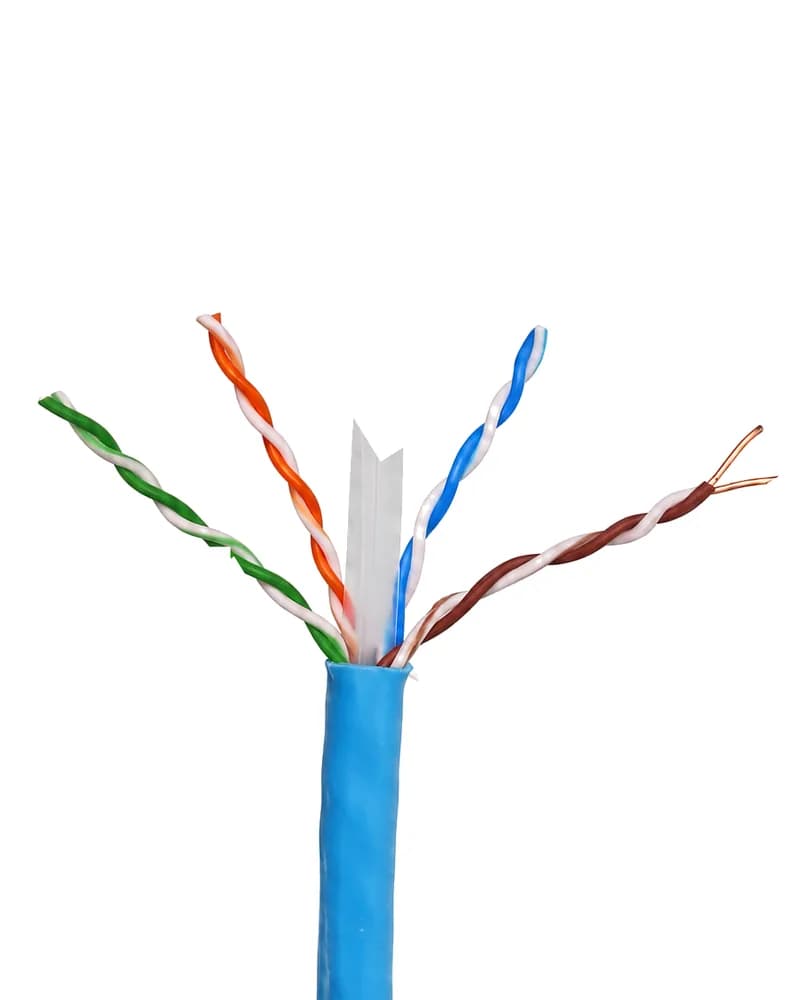 Cat6A
Cat6A
Rated frequency
The category's bandwidth. All three are specified for a 100 m channel.
| Specification | Cat5e | Cat6 | Cat6A |
|---|---|---|---|
| Rated frequency | 100 MHz | 250 MHz | 500 MHz |
| ISO/IEC class | Class D | Class E | Class EA |
| 1 Gb/s (1000BASE-T) | 100 m | 100 m | 100 m |
| 2.5 / 5 Gb/s (IEEE 802.3bz) | Up to 100 m | Up to 100 m | 100 m |
| 10 Gb/s (10GBASE-T) | Not supported | 37 m assured; 37–55 m depends on the installation | 100 m |
| Typical conductor | 24 AWG (0.50 mm) | Often 23 AWG (0.57 mm) | Typically 23 AWG (0.57 mm) |
| Diameter and cost | Smallest, lowest | Middle | Largest, highest |
Channel length is 100 m for all three: up to 90 m of installed horizontal cable plus up to 10 m of patch cords in total. A higher category gives more bandwidth and margin, not more distance.
Speed in practice
- 1 Gb/s runs over all three categories at 100 m. Fluke Networks recommends Cat5e as the minimum for new installations.
- 2.5 and 5 Gb/s (IEEE 802.3bz, 2016) were designed for existing Cat5e and Cat6 cabling at up to 100 m, which suits Wi-Fi access points that need more than 1 Gb/s. In very large bundles of Cat5e, crosstalk between cables can limit 5 Gb/s.
- 10 Gb/s (10GBASE-T) is specified for 100 m on Cat6A. On installed Cat6, TIA's bulletin TSB-155 assures operation up to 37 m; between 37 and 55 m it depends on crosstalk between neighbouring cables, and only field testing can confirm it. For any new 10 Gb/s design, use Cat6A.
How far 10 Gb/s reaches
- Assured
- Depends on the installation
10GBASE-T over installed cable. Cat6 figures from TIA TSB-155; Cat6A from IEEE 802.3an.
Power over Ethernet
Cameras, access points, phones and lighting increasingly take their power from the network cable. IEEE 802.3bt delivers up to 51 W (Type 3) or 71.3 W (Type 4) at the device, using all four pairs. That current heats the cable, and the heat builds up in bundles. TIA's guidance (TSB-184-A and ANSI/TIA-568.2-E, 2024) recommends:
Power available at the device
Minimum power guaranteed at the powered device for each IEEE PoE type.
- Category 6A or better for new PoE installations;
- an ambient temperature no higher than 45 °C, with cable rated for at least 60 °C;
- splitting large bundles rather than packing hundreds of cables together.
Thicker conductors run cooler, and conductor material matters too: copper-clad aluminium conductors have higher resistance and heat more under PoE. See CCA or solid copper.
Which one to choose
| Project | Usual choice |
|---|---|
| Short runs, data at 1 Gb/s, tight budget | Cat5e |
| Offices, CCTV and access control at 1 Gb/s with standard PoE | Cat6 |
| New buildings planned for ten years or more | Cat6A |
| 10 Gb/s to the desk or between switches over copper | Cat6A |
| Wi-Fi 6, 6E and 7 access points, high-power PoE cameras, PoE lighting | Cat6A |
Three myths to drop. "Cat6 does 10 Gb/s to 55 m": only 37 m is assured. "Cat5e can only do 1 Gb/s": 2.5 Gb/s, and often 5 Gb/s, run over Cat5e at 100 m. "Cat7 is better than Cat6A for an RJ45 network": Category 7 is an ISO class, not a TIA category, built as fully shielded S/FTP; for RJ45 networks Cat6A is the standard choice.
Check what you are comparing
For the construction codes, see shielding codes explained. Each of our quotations states the category, conductor material and size, construction and length.
Products in this guide
References
- Fluke Networks, "Ethernet cable history" (2022), "1000BASE-T over Category 5", and "10GBASE-T field testing requirements" (2014).
- Ethernet Alliance and NBASE-T Alliance, IEEE 802.3bz overview; Ethernet Alliance, IEEE 802.3bt overview (2019) and article on PoE cable heating (2020).
- Superior Essex, "Does CAT6 support 10GBASE-T?" (2020).
- Belden, "How the new TSB-184-A standard supports PoE" (2017).
- Siemon, summary of ANSI/TIA-568.2-E (2024).
- Telegärtner, "Longer patch cords mean shorter horizontal cable".